• Skip to primary navigation
  • Skip to main content
  • Home
  • People
    • Professor
    • Postdoctoral Researcher
    • PhD Students
    • MS Students
    • Undergraduate Students
    • Visiting Scholar
    • Alumni
  • Research
    • Multiscale Modeling
      • Accelerated Heterogeneous Catalysis
      • Crystallization
      • Microwave Reactor Modeling
      • Paper Manufacturing
      • Lignocellulosic Biomass Fractionation
    • Hybrid Modeling
      • Hybrid Modeling of Chemical Processes
      • Application of Hybrid Modeling to Fermentation Processes
    • Data Science & Machine Learning
      • Data-driven Adaptive Modeling
      • Control Beyond the Training Domains
      • Battery Modeling and Monitoring
      • Fault Prognosis using Data-driven Adaptive Models
      • Machine Learning-Enhanced Crystallization
      • Model Reduction
    • Drug Discovery
      • Transformer-Driven ADMET Screening for Efficient Drug Evaluation
      • Latent Space Optimization for Molecular Design
      • Hybrid PBPK Modeling with Transformer-Based Pharmacokinetic Predictions
    • Molecular Dynamics Modeling
      • DFT-kMC-LSTM Energy Materials
      • Cellular Biochemical Reaction Pathways
      • Supramolecular Assemblies
    • Hydraulic Fracturing
      • Hydraulic Fracturing for Enhanced Productivity
      • Wastewater and Shale Gas
  • Publications
  • Presentations
  • Recent News
  • Location
  • Gallery

Kwon Research Group

Texas A&M University College of Engineering

Research

Data-driven Adaptive Modeling

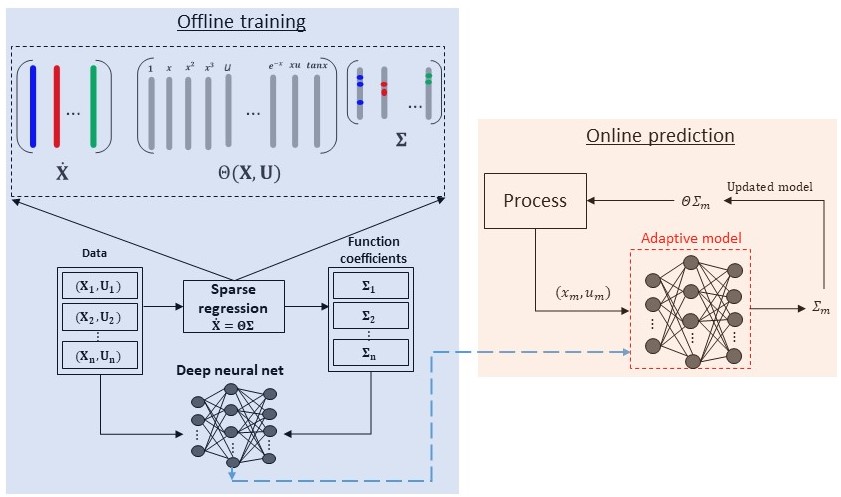
Chemical processes are complex and often characterized by nonlinearity, time variation, and uncertainty. As a result, data-driven modeling approaches have gained widespread popularity in industry and academia for modeling these processes. However, a model trained offline is not sufficient to deal with process uncertainties, which are prevalent in chemical processes. This limitation necessitates an adaptive modeling approach that can predict nonlinear process dynamics in real-time by coping with process uncertainties. Based on this motivation, in our group, we work on developing data-driven adaptive modeling frameworks for modeling nonlinear process systems and predicting dynamics in real time. Specifically, we use the techniques of sparse regression with deep learning to build an adaptive sparse model that can readily cope with abrupt dynamical changes on-the-fly. Further, this developed model can be integrated into various process monitoring and control applications.

Literature:

Bhadriraju, M. S. F. Bangi, A. Narasingam, and J. S. Kwon, “Operable adaptive sparse identification of systems (OASIS): application to chemical processes”, AIChE J., 2020, 66, e16980.
Control Beyond the Training Domains


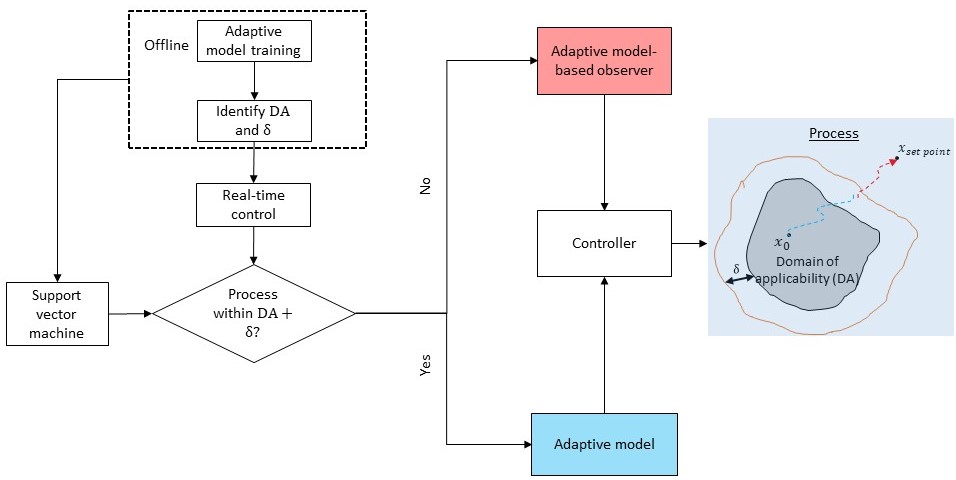
Effective process control is crucial, both within and outside the training regions. Chemical processes can often undergo changes in their operating targets due to several factors, including modified product quality, new product design, business demands, and process economics. Such scenarios can require controlling the process at completely new operating conditions outside the training region of the existing model. However, data-driven models usually fail to extrapolate beyond their training domains, thus restricting their applicability only to their training regions. Developing another model for the new operating scenarios is not a trivial task due to the unavailability of historical process data. Because of this, implementing data-driven process control in new operating settings outside the training region remains a major challenge. Motivated by this challenge, developing a systematic approach to control a process outside the training region of its model is an interesting direction. Accordingly, the adaptation capabilities of OASIS together with a state estimator can be useful in effectively controlling a process in new operation domains.

Battery Modeling and Monitoring

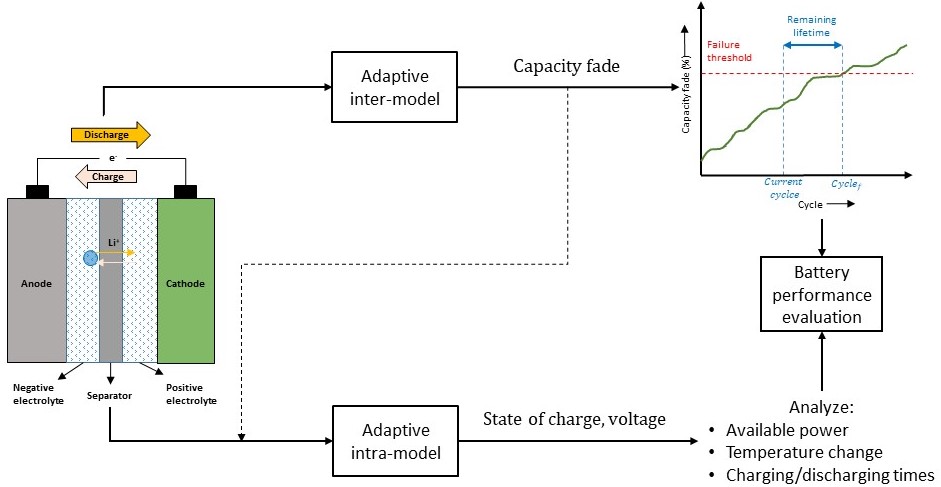
Due to their highly desirable characteristics such as high energy density, less weight, and low self-discharge, Li-ion batteries are popularly deployed in various applications, including powering electric vehicles. With increasing operating cycles, the degradation in a battery significantly impacts its reliability and can lead to failure events. Often, the reliability of a battery is defined by its remaining useful life (RUL), temperature, and smoothness of applied voltage or current. Specifically, RUL, which can be estimated from the predicted battery degradation trend, provides an idea about the number of cycles remaining before a battery is expected to fail. An accurate RUL estimation aids in developing effective predictive maintenance strategies for enhancing the battery’s health. Though RUL estimation helps in predicting the long-term performance of a battery, it is essential to also predict the battery’s condition in the short term to better monitor its overall performance. This requires modeling the dynamics of other battery variables such as voltage and state of charge (SoC) that evolve with charge-discharge operation. Accurate prediction of SoC and voltage helps understand many critical battery characteristics such as available power, charging and discharging times, and temperature change. Additionally, undesired cases of over-charging and over-discharging can be effectively mitigated through SoC prediction. Thus, real-time assessment of these variables together with capacity degradation enables better management of a battery’s performance. Our group works on modeling and monitoring the performance of a battery by predicting the inter-cyclic and intra-cyclic battery dynamics and accurately estimating RUL to enhance the overall battery operational safety.

Literature:

Bhadriraju, F. Khan, and J. S. Kwon, “An adaptive data-driven approach for two-timescale dynamics prediction and remaining useful life estimation of Li-ion batteries”, Computers & Chemical Engineering, 2023.

Fault Prognosis using Data-driven Adaptive Models

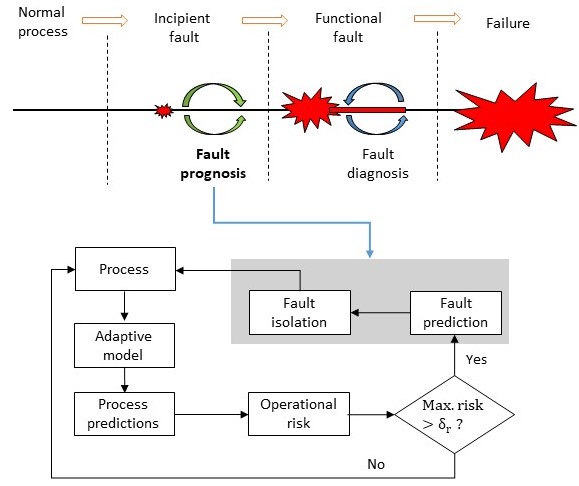
The traditional fault detection and diagnosis (FDD) methods employed for process monitoring follow a reactive fault management approach. These methods detect an already present fault and take corrective action to mitigate the damage to the process. In order to minimize the degradation that a fault can bring to a process, fault diagnosis methods aim at achieving early fault detection, which is still reactive fault management. By the time the fault has been detected and managed, the process might have been affected to some degree. This situation can be avoided by implementing fault prognosis approaches that predict the occurrence of an impending fault ahead of its time and take appropriate action beforehand. For fault prediction, it is essential to track the varying process dynamics in order to predict a fault in advance. For this purpose, employing an adaptive model such as OASIS that can readily cope with changing dynamics will aid in forecasting the future process behavior reasonably well, thereafter providing an early fault prediction.

Literature:

B. Bhadriraju, F. Khan, and J. S. Kwon, “OASIS-P: Operable adaptive sparse identification of systems for fault prognosis of chemical processes”, Journal of Process Control, 2021, 107, 114-126.

Machine Learning-Enhanced Multiscale Modeling and Control of Crystallization

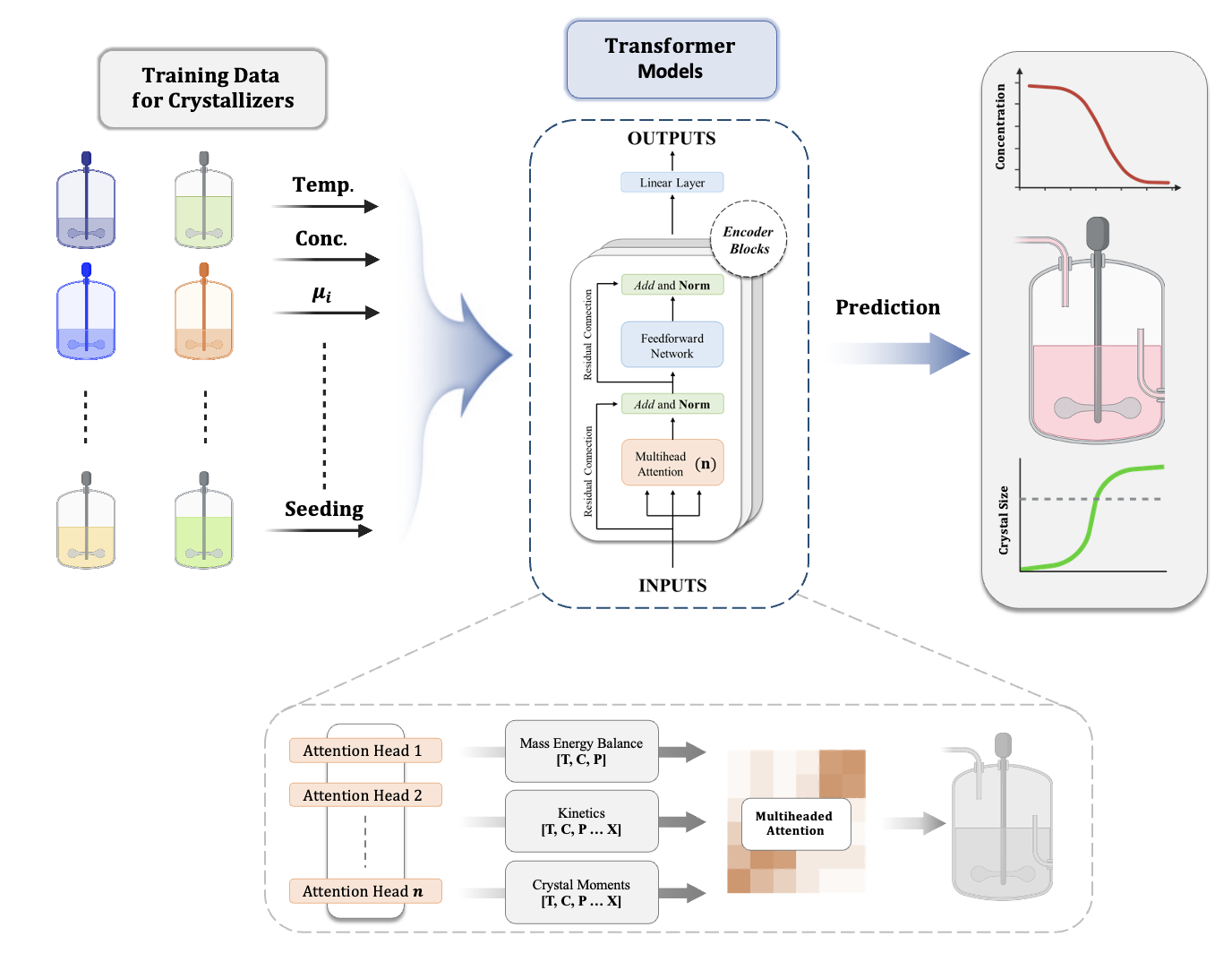
Multiscale Modeling of QD Crystallization: First-of-a-kind high-fidelity multiscale modeling of continuous quantum dot (QD) crystallization was modeled and experimentally validated by combining the microscopic kMC model with macroscopic mass and energy balance equations. Further, a DNN was utilized to mimic the above model to optimize the process conditions of the crystallizer for yielding the desired crystal size.

Time-series-Transformers (TST) for Batch Crystallization: In another case, a novel encoder-based time-series transformer (TST) model was developed and compared with other state-of-the-art (SOTA) ML models (e.g., RNN, LSTM, and CNN) for accurate time-series modeling of batch crystallization of dextrose. Also, the developed TST model was integrated with a model predictive controller (MPC) for setpoint tracking applications.

Transfer learning in Sugar Crystallization using CrystalGPT: That said, although the above-developed models are highly accurate, they are tailored to a specific system and show poor system-to-system (S2S) transferability. To resolve this issue, a novel encoder-decoder TST (i.e., CrystalGPT) was trained and tested to show excellent predictive performance (i.e., 10 times better than LSTM) for a set of 20 unique sugar crystal systems, and an additional unencountered system.

Literature:

Sitapure, N., Epps, R., Abolhasani, M. and Kwon, J.S.I., 2021. Multiscale modeling and optimal operation of millifluidic synthesis of perovskite quantum dots: towards size-controlled continuous manufacturing. Chemical Engineering Journal, 413, p.127905.

Sitapure, N. and Kwon, J.S.I., 2023. Exploring the potential of time-series transformers for process modeling and control in chemical systems: an inevitable paradigm shift?. Chemical Engineering Research and Design, 194, pp.461-477.

Sitapure, N. and Kwon, J.S., 2023. CrystalGPT: Enhancing system-to-system transferability in crystallization prediction and control using time-series-transformers. arXiv preprint arXiv:2306.03099.

Model Reduction and Control of Distributed Parameter Systems

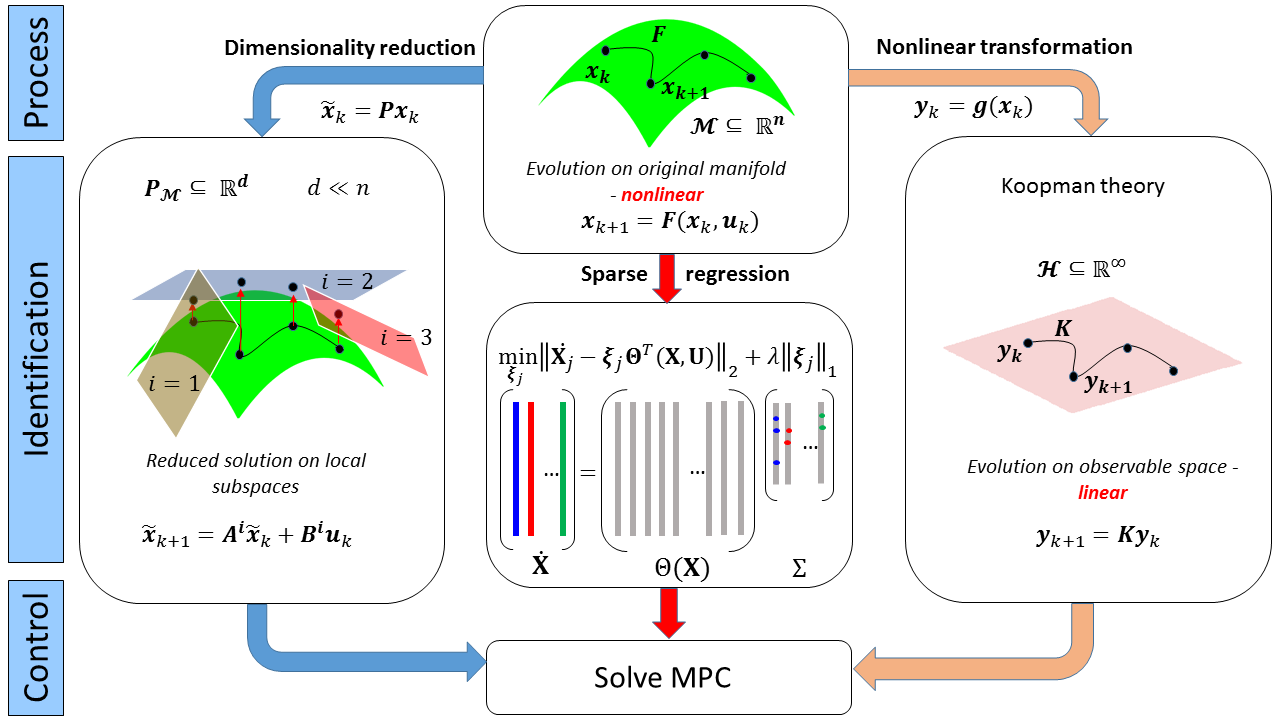
Real life processes characterized by PDEs pose challenges when used in numerical simulations, due to high dimensionality and complexity. Approximate models aim to lower the complexity of such problems for use in process control. However, in many chemical and industrial processes these approximate models must be customized to accurately capture the dynamics over the entire state-space. In our group, we are developing a systematic framework to achieve accurate model identification and closed-loop control on three fronts: (i) by combining the concepts of domain partitioning and projection-based reduced order modeling, (ii) by leveraging machine learning tools such as sparse regression to discover interpretable models, and (iii) by adopting an operator-centric perspective of dynamical systems to develop linear models which enable the use of of simple linear control theory and results in standard convex optimal control problems. We further extend dimensionality reduction to the parameter space and integrate with a data assimilation technique for computationally tractable solutions to ill-posed inverse problems.

Local model reduction

A. Narasingam and J. S. Kwon,” Development of local dynamic mode decomposition with control: Application to model predictive control of hydraulic fracturing,” Comp. & Chem. Eng., 2017, 106, 501-511.  DOI: 10.1016/j.compchemeng.2017.07.002

A. Narasingam, P. Siddhamshetty and J. S. Kwon, “Temporal clustering for order reduction of nonlinear parabolic PDE systems with time-dependent spatial domains: Application to a hydraulic fracturing process,” AIChE J., 2017,  63, 3818-3831. DOI: 10.1002/aic.15733

Sparse identification of dynamics

A. Narasingam and J. S. Kwon, “Data-driven identification of interpretable reduced-order models using sparse regression,” Comp. & Chem. Eng., 2018, 119, 101-111.  DOI: 10.1016/j.compchemeng.2018.08.010

S. Sidhu, A. Narasingam, P. Siddhamshetty and J. S. Kwon, “Model order reduction of nonlinear parabolic PDE systems with moving boundaries using sparse proper orthogonal decomposition: Application to hydraulic fracturing,” Comp. & Chem. Eng., 2018, 112, 92-100.  DOI: 10.1016/j.compchemeng.2018.02.004

Koopman operator-based identification and control

A. Narasingam and J. S. Kwon, “Koopman Lyapunov-based model predictive control of nonlinear chemical process systems,” AIChE J DOI: 10.1002/aic.16743.


LSTM-based Control of Pulp Digester

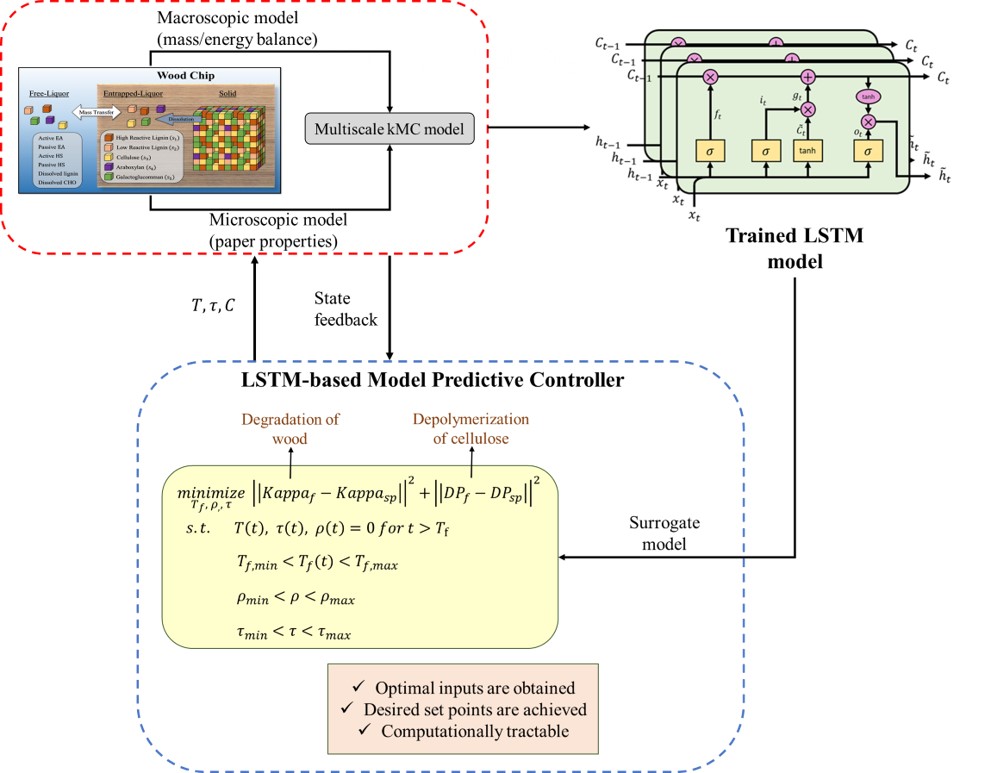
Our research group has developed a closed-loop LSTM-based model predictive control system to optimize the Kraft pulping process for desired microscopic properties of paper. A multiscale model combining mass and thermal energy balance equations with a layered kinetic Monte Carlo algorithm accurately captures properties like fiber morphology, kappa number, and Cellulose Degree of Polymerization. Datasets for network training were generated by executing the model under various operating conditions. An LSTM-ANN network achieved a prediction accuracy of over 98% for kappa number and cellulose DP, considering time-varying and time-invariant conditions. A closed-loop LSTM-based multi-objective optimal controller was designed to achieve target set-point values while considering constraints, demonstrating exceptional accuracy and computational efficiency.

Literature:

Shah, Parth, Hyun-Kyu Choi, and Joseph Sang-Il Kwon. “Achieving optimal paper properties: A layered multiscale kMC and LSTM-ANN-based control approach for kraft pulping.” Processes3 (2023): 809.

Choi, Hyun‐Kyu, and Joseph Sang‐Il Kwon. “Multiscale modeling and control of Kappa number and porosity in a batch‐type pulp digester.” AIChE Journal6 (2019): e16589.

Drug Discovery

Hybrid PBPK Modeling with Transformer-Based Pharmacokinetic Predictions

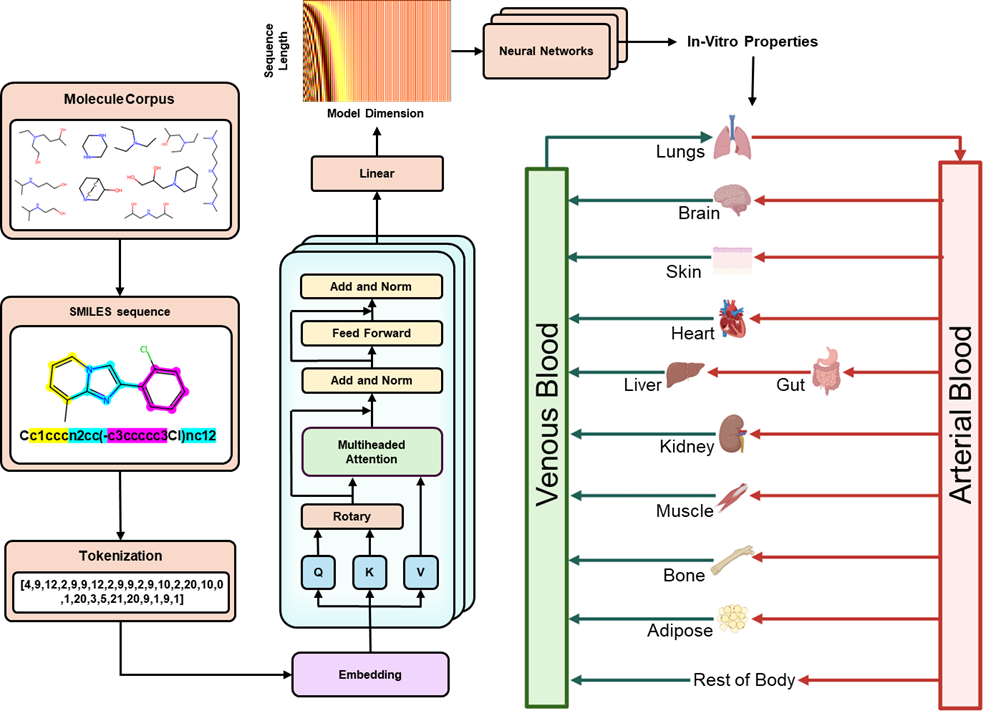
Physiologically based pharmacokinetic (PBPK) models are widely used for mechanistic drug disposition studies, but they require experimentally measured parameters, which limits large-scale early-stage screening. This project integrates transformer-based pharmacokinetic property predictions with PBPK modeling to reduce dependence on experimental testing.

Key contributions:

  • Transformer-predicted pharmacokinetic parameters, including intrinsic clearance, renal clearance, plasma protein binding, and permeability.
  • Integration with PBPK models, allowing for rapid in silico pharmacokinetic assessments while maintaining mechanistic interpretability.
  • Scalable and efficient screening, reducing the time and cost of drug candidate evaluation.

By combining data-driven property prediction with PBPK modeling, this hybrid framework provides a faster and more scalable approach to pharmacokinetic assessments in drug discovery.

Transformer-Driven ADMET Screening for Efficient Drug Evaluation

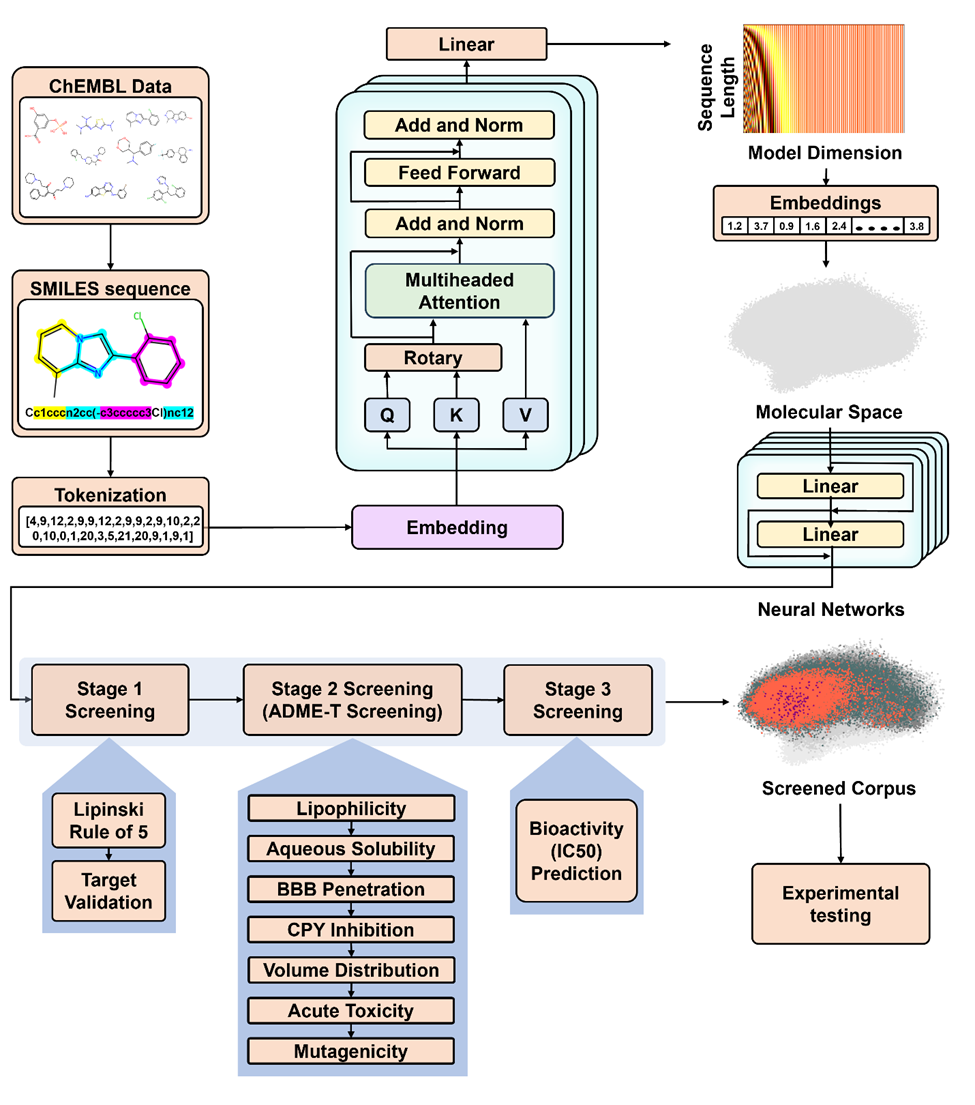
Early-stage drug discovery requires evaluating thousands of compounds for pharmacokinetic properties, but traditional ADMET screening depends on time-consuming in vitro and in vivo experiments. This project develops a transformer-based framework that predicts multiple ADMET properties—such as absorption, metabolism, distribution, excretion, and toxicity—directly from molecular structure, significantly reducing experimental workload.

Key features of this approach:

  • Unified property prediction – A single model predicts multiple ADMET properties, eliminating the need for separate models.
  • No handcrafted descriptors – The model learns directly from molecular structures, making it adaptable to different drug-like molecules.
  • Scalable high-throughput screening – Enables the rapid evaluation of thousands of compounds, prioritizing promising candidates while filtering out those with poor pharmacokinetics.

This method accelerates drug screening, cutting costs and reducing reliance on experimental assays while maintaining accuracy in pharmacokinetic evaluations.

Khambhawala, A., Lee, C.H., Pahari, S. and Kwon, J.S.I., 2025. Minimizing late-stage failure in drug development with transformer models: Enhancing drug screening and pharmacokinetic predictions. Chemical Engineering Journal, p.160423.https://doi.org/10.1016/j.cej.2025.160423


  • « Go to Previous Page
  • Go to page 1
  • 2
  • Go to page 3
  • Go to Next Page »

© 2016–2026 Kwon Research Group Log in

Texas A&M Engineering Experiment Station Logo
  • State of Texas
  • Open Records
  • Risk, Fraud & Misconduct Hotline
  • Statewide Search
  • Site Links & Policies
  • Accommodations
  • Environmental Health, Safety & Security
  • Employment